
A Personal Reflection on René Descartes’ “I think, therefore I am.”
What began as a simple idea about the brain’s function unfolds into a deeper understanding of self-awareness, identity, and what it truly means to exist.
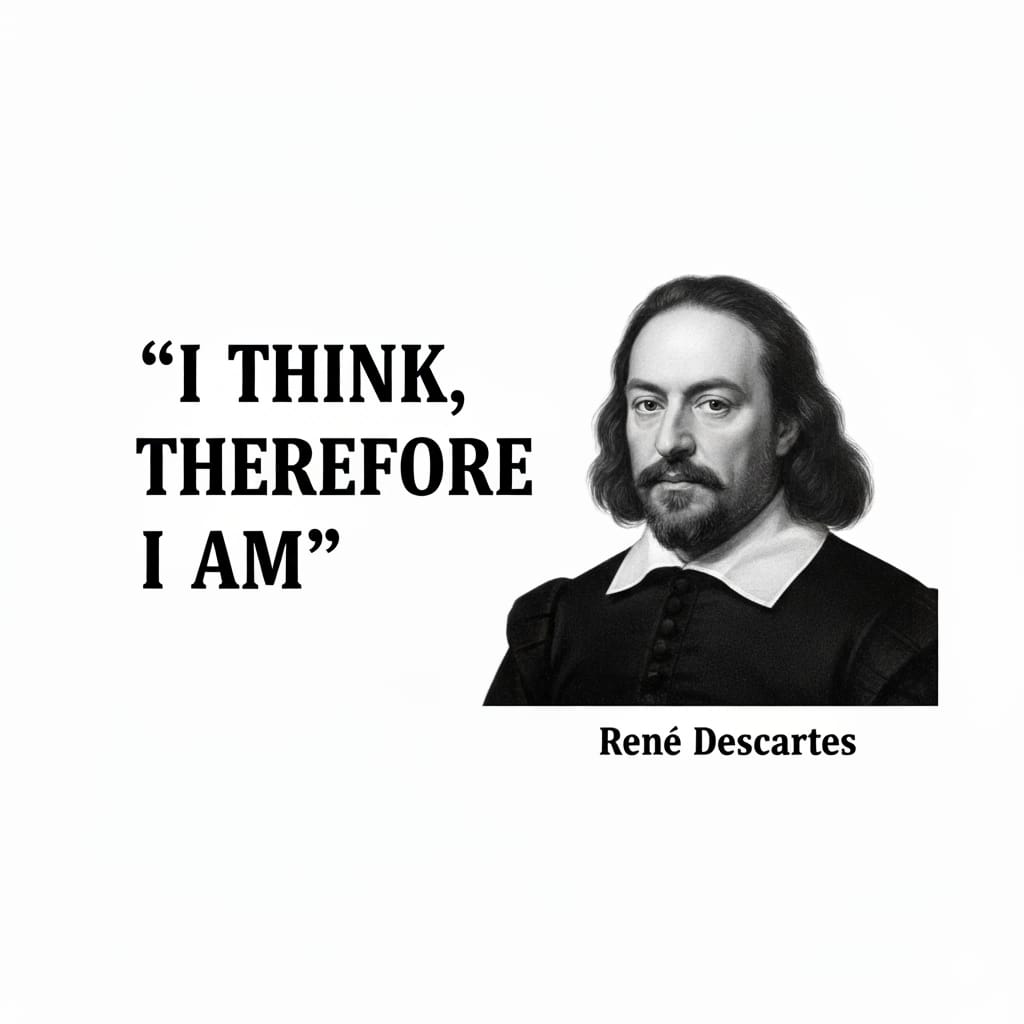
From a simple brain function to the engine of our unique identity.
When I first encountered René Descartes’ assertion, “I think, therefore I am” (Cogito, ergo sum), in my philosophy class, my initial interpretation was strictly literal: thinking simply equated to the biological functioning of the brain. As long as my brain was operational, I existed.
And while that basic premise holds a grain of truth, I soon realized the quote’s true depth demanded a broader, more existential view.
From Brain to Consciousness
As I revisited it over the years, I began to sense there was more to it. After all, a philosopher as notable as Descartes couldn’t have meant something so literal.
With further reflection, I came to see that Descartes was speaking to self-awareness — the recognition that I am aware, that I exist as a conscious being capable of thought, doubt, and reflection.
The very act of questioning, observing, and analysing becomes the definitive proof that I am here, alive, and aware. The mind’s activity serves as the ultimate validation of existence itself, an anchor in a world that can often feel chaotic and uncertain.
Beyond Function: Thought as Identity (My Perspective)
My current understanding takes the concept even deeper. I now see the quote as a powerful statement on identity; how our thinking gives shape to who we are.
It’s no longer just about the brain’s biological function; it’s about how our thoughts define us; how our internal landscape of ideas determines our external reality. It’s about the functioning of ideas, perspectives, and the transformations we bring within ourselves when life demands it; our observations, our analysis, our evolution.
The equation shifts: it’s not just that we think, but what we think. It moves from the passive observation of a functioning brain to the dynamic, active creation of the self through:
- The functioning of ideas and perspectives
- Our capacity for internal change and evolution
- The continuous analysis of our experiences
What we think, we eventually become. This evolution of consciousness is the living, breathing proof of our unique existence.
Perhaps a decade from now, I will find yet another layer of meaning in these words. But for today, this understanding; that my conscious mind is the engine of my personal evolution and the shaper of my unique self; is what truly resonates.
Closing thoughts
Philosophy has a way of evolving with us. What once feels abstract or distant often starts making sense when life itself becomes the classroom. Maybe that’s the beauty of Descartes’ words. Their meaning shifts as we grow, inviting us to keep thinking, questioning, and rediscovering who we are.
 LegallyUnbound
Leave a comment